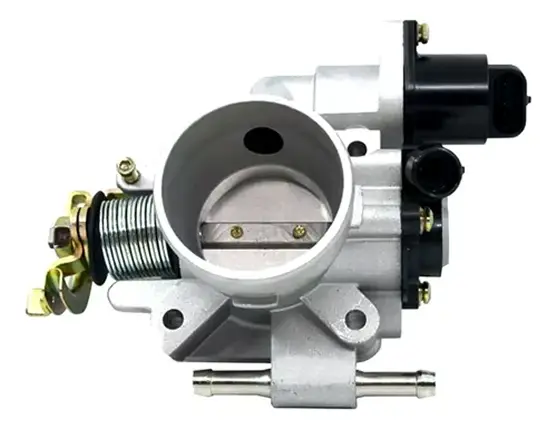
The Ultimate Guide to Throttle Bodies: Restoring Your Engine's "Breath"
In the high-stakes world of modern engine performance, the throttle body acts as the gatekeeper. Whether you are driving a Ford F-150, a Toyota RAV4, or a performance-tuned Mustang, this component is what translates your foot's movement into engine power.
In 2026, with the increasing complexity of Electronic Throttle Control (ETC), understanding this part is no longer just for mechanics—it’s for every car owner who wants to avoid a $1,000 repair bill.
⚡ Executive Summary: The 2026 Landscape
- The Technology: Over 95% of vehicles on U.S. roads today utilize Drive-by-Wire technology. The mechanical cable is dead; your car now uses electrical signals and high-torque servomotors to manage airflow.
- The Cost Factor: A professional throttle body cleaning in 2026 averages $130 to $300, while a full replacement can range from $500 to $1,000+ depending on the brand.
- Maintenance Alert: Experts recommend a throttle body inspection and cleaning every 75,000 to 90,000 miles to prevent carbon buildup from "bricking" the sensitive electronic actuators.
- Regulatory Note: Despite shifts in federal GHG (Greenhouse Gas) regulations in early 2026, strict NOx emissions standards remain, making a clean throttle body essential for passing state inspections like California’s SMOG check.
🧭 Table of Contents
- How the Throttle Body Works: Drive-by-Wire vs. Mechanical
- Top 5 Symptoms of a Bad Throttle Body
- Common OBD-II Diagnostic Codes (P0121, P2112, etc.)
- Step-by-Step DIY Cleaning Guide for US Models
- The "Electronic Relearn" Procedure: Why Your Car is Revving High
- 2026 Replacement Cost Comparison by Vehicle Brand
- Frequently Asked Questions (FAQ)
1. How it Works: The Shift to Drive-by-Wire
The throttle body is located between your air intake filter and the intake manifold. Inside is a circular butterfly valve.
- Mechanical Systems (Classic): Found in pre-2010 models, a steel cable physically pulls the valve open.
- Electronic Systems (Modern): Your gas pedal is essentially a joystick. When you press it, the ECU (Engine Control Unit) commands a motor on the side of the throttle body to open the valve.
Why the change? Electronic control allows the car to manage traction control, fuel economy, and cruise control much more precisely than a human foot ever could.
2. Top 5 Symptoms of a Bad Throttle Body
If you notice these red flags, your throttle body is likely contaminated with carbon or suffering from electronic fatigue:
- Rough or "Hunting" Idle: Your RPM needle bounces between 500 and 1,200 while stopped.
- Delayed Throttle Response: You hit the gas, there’s a "hiccup" or lag, and then the car lurches forward.
- Limp Home Mode: A terrifying "Reduced Engine Power" message appears on your dash, restricting you to low speeds.
- Poor Fuel Economy: A sticky valve causes an imbalanced air-fuel ratio, forcing the engine to burn more gas.
- Stalling at Stoplights: The engine fails to maintain the minimum airflow required to stay running when you come to a halt.
3. Common OBD-II Diagnostic Codes
Using a standard OBD-II scanner, look for these specific "P-codes" to confirm the issue:
- P0121: Throttle Position Sensor (TPS) Range/Performance Problem.
- P0507: Idle Control System RPM Higher Than Expected (often occurs after a bad cleaning).
- P2112: Throttle Actuator Control System - Stuck Closed.
- P2135: Throttle/Pedal Position Sensor/Switch Voltage Correlation (usually a wiring or sensor failure).
Essential Throttle Body Restoration Kit (2026)
Don't let carbon buildup or sensor glitches lead to a $1,000 dealership bill. These are the specific tools and chemicals required to safely service Drive-by-Wire systems without damaging sensitive electronics.
1. Precise Electronic Diagnostics
THE PROBLEM: Your car has a "Reduced Engine Power" light. You suspect the Throttle Position Sensor (TPS), but you need to see the "live data" to confirm a failing actuator before buying parts.
THE SOLUTION: An OBD2 scanner that graphs the throttle plate angle in real-time. This allows you to identify "dead spots" in the electronic motor or a faulty gas pedal correlation (P2135).

Professional OBD2 Scanner with Live Data
- Key Feature: Graphs TPS (Throttle Position) and APP (Accelerator Pedal) correlation.
- Price Range:
$29.00 - $32.00 USD - VIEW OFFER ON AMAZON
2. Sensor-Safe Chemical Cleaning
THE PROBLEM: Carbon buildup (sludge) is sticking to the butterfly valve. Using a standard degreaser or carburetor cleaner will melt the internal seals and ruin the electronic motor.
THE SOLUTION: A specialized cleaner formulated for Drive-by-Wire systems. It is safe for the sensitive Teflon-style coatings and plastic components found in modern intake manifolds.

CRC Throttle Body & Air-Intake Cleaner
- Safe For: Electronic throttle actuators and coated butterfly valves.
- Price Range:
$11.00 - $12.00 USD - ADD TO CART ON AMAZON
3. Non-Marring Scrubbing Tools

Heavy-Duty Nylon Cleaning Brushes
- Advantage: Won't scratch the aluminum bore or damage the plate coating.
- Price Range:
$7.00 - $8.00 USD - BUY NOW ON AMAZON
4. Reach for Recessed Bolts

Metric Socket Set with Wobble Extensions
- Includes: 1/4" drive ratchets and 6-inch extensions for tight engine bays.
- Price Range:
$38.99 - $41.99 USD - SEE DETAILS ON AMAZON
Transparency Note: As Amazon Associates, we earn a small commission from qualifying purchases. We only recommend equipment that meets the technical standards for the latest generation of vehicles in our market.
4. Step-by-Step DIY Cleaning Guide
Disclaimer: Modern electronic throttle bodies have sensitive coatings. Only use cleaners labeled "Safe for Coated Throttle Bodies."
Tools Needed:
- Throttle Body Cleaner (e.g., CRC or Gumout)
- Screwdriver or Socket set (usually 8mm or 10mm)
- Lint-free microfiber cloth
- Soft-bristled nylon brush (like a toothbrush)
The Process:
- Safety First: Disconnect the negative battery terminal. This prevents the motor from snapping shut on your fingers and resets basic ECU memory.
- Access: Loosen the hose clamps on the air intake duct and pull the hose away to reveal the butterfly valve.
- The "Dry" Wipe: Use your cloth to wipe away the loose black "gunk" (carbon) around the edges of the plate.
- Spray the Cloth, Not the Part: Avoid spraying liquid directly into the shaft of the valve, as it can seep into the electronics. Spray the cloth or brush instead.
- Gentle Scrubbing: Clean the "bore" (the tunnel) and both sides of the plate.
- Reassemble: Ensure the air duct is airtight. Any vacuum leak here will cause a Check Engine light immediately.
5. The "Electronic Relearn" Process
After cleaning, your car might idle at 2,000 RPM. This is normal! The computer was used to "fighting" the dirt to stay open. Now that it’s clean, it’s letting in too much air.
- Professional Method: A mechanic uses a scan tool to perform an Idle Relearn.
- Manual Method: Many US brands (like GM and Ford) have a "Key-On, Engine-Off" sequence. Usually, it involves leaving the ignition on for 30 seconds, then off, then repeating, allowing the internal motor to find its new "zero" position.
6. 2026 Cost Comparison: USA Market Rates
| Car Model (Example) | Professional Cleaning | Full Replacement (Parts + Labor) |
|---|---|---|
| Ford F-150 (V6/V8) | $120 - $180 | $450 - $650 |
| Toyota RAV4 / Camry | $130 - $210 | $550 - $750 |
| BMW 3/5 Series | $180 - $350 | $850 - $1,200 |
| Honda Civic / Accord | $110 - $190 | $400 - $600 |
| Chevy Silverado | $125 - $185 | $500 - $700 |
Note: Labor rates in major metros like New York or Los Angeles can be 30% higher than the national average.
7. Frequently Asked Questions (FAQ)
Q: Can I use Carburetor Cleaner? A: No. Carb cleaners are too harsh for the Teflon-style coatings inside modern throttle bodies and can melt plastic electronic components.
Q: How long does a replacement take? A: For most American and Japanese cars, it’s a 1 to 1.5-hour job. European luxury cars may take 2-3 hours due to intake manifold complexity.
Q: Does a bad throttle body affect my transmission? A: Surprisingly, yes. Since the transmission timing depends on throttle position, a glitchy sensor can cause "harsh shifting" or hunting for gears.
Is your Check Engine light on with a P21xx code? I can help you find the specific "relearn" procedure for your exact Year, Make, and Model so you can save on dealership fees!