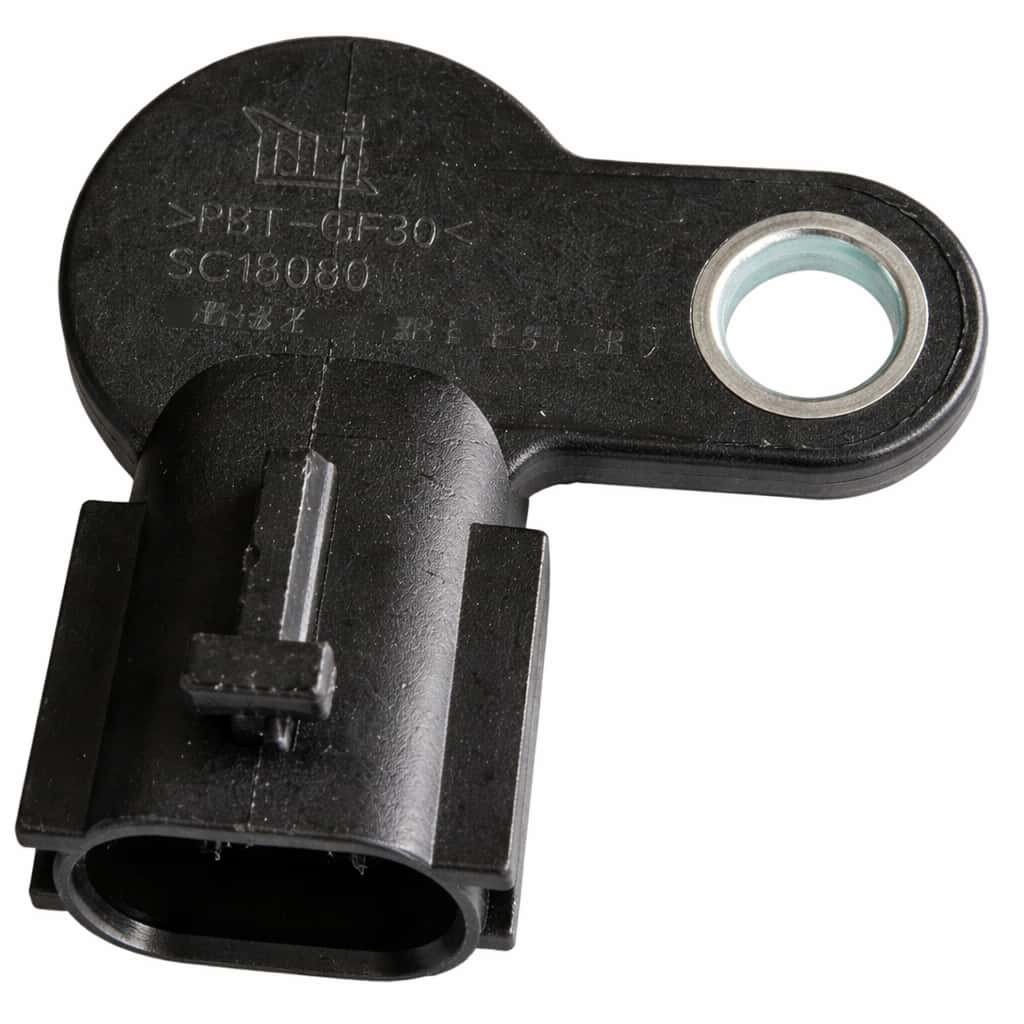
The Crankshaft Position Sensor (CKP): The Pulse of Your Engine
If the engine is the heart of your vehicle, the Crankshaft Position Sensor (CKP) is its pacemaker. This small but critical electronic device monitors the rotation speed and precise position of the crankshaft. It sends this data to the Engine Control Unit (ECU), which then determines exactly when to trigger the spark plugs and pulse the fuel injectors.
In 2026's high-efficiency internal combustion engines, timing is everything. A microsecond of lag from the CKP sensor can lead to a complete loss of power. When this sensor fails, it doesn't just make the car run poorly—it usually renders the vehicle completely unstartable, leaving you stranded until the part is replaced.
🧭 How It Works: The Difference Between Inductive and Hall Effect
Understanding which type of sensor your vehicle uses is the first step in a successful DIY diagnosis:
- Inductive Sensors (2-Wire): These generate their own AC voltage via magnetism as a reluctor wheel spins past the sensor tip. They are rugged but can be less accurate at very low cranking speeds.
- Hall Effect Sensors (3-Wire): These require an external power source (5V or 12V) and produce a digital "square wave" signal. They are the 2026 industry standard due to their extreme precision, which is vital for modern Start-Stop systems and Variable Valve Timing (VVT).
⚠️ Top 5 Symptoms of a Failing CKP Sensor
Crankshaft sensor failure is notoriously "moody." You might experience these symptoms intermittently before the part dies completely:
1. Engine Cranks but Won't Start
This is the most common "hard fail." You turn the key, the starter motor sounds healthy and spins the engine, but there is no combustion. Without a CKP signal, the ECU doesn't know the engine is turning, so it cuts fuel and spark for safety.
2. The "Heat Soak" Failure
This is the classic "phantom" issue. Your car starts perfectly in the morning, but after driving to the store and letting it sit for 15 minutes, it won't restart. The heat from the engine causes the internal copper windings of the sensor to expand and break contact. Once the engine bay cools down, the sensor works again like nothing happened.
3. Intermittent Stalling
You are cruising at highway speeds when the engine suddenly shuts off—no sputtering, no warning, just dead. This is extremely dangerous and often points to a short in the sensor wiring or a total internal failure of the CKP.
4. Severe Misfiring and Vibrations
If the sensor provides an erratic or "noisy" signal, the ECU may fire the spark plugs at the wrong time. This leads to engine bucking, backfiring, and a significant loss of acceleration.
5. Check Engine Light (Codes P0335 & P0336)
Your dashboard will almost certainly light up. The most common U.S. OBD-II codes are:
- P0335: Crankshaft Position Sensor "A" Circuit Malfunction.
- P0336: Crankshaft Position Sensor "A" Circuit Range/Performance (Signal Noise).
🛠️ DIY Diagnostic: Is the Sensor Actually Dead?
Before you spend money at the parts store, perform these quick checks:
- The Tachometer Bounce: Watch your RPM needle while cranking the engine. If it stays dead at zero and doesn't "wiggle" even a tiny bit, the sensor isn't sending a signal.
- Harness Inspection: The CKP is often located near the bottom of the block or the bell housing—areas prone to road salt, oil leaks, and extreme heat. Check for melted wires or oil-soaked connectors that might be grounding out the signal.
- Resistance Test (Inductive Only): Use a multimeter to check for continuity. If it reads "O.L." (Open Loop), the internal coil is broken, and the sensor is junk.
💰 2026 U.S. Repair Cost Estimates
While the sensor itself is relatively inexpensive, the labor cost varies based on accessibility. On some trucks, it's a 10-minute job; on some Euro-spec cars, you may have to remove the starter or the intake manifold.
| Repair Category | Estimated Cost (Parts + Labor) | Difficulty |
|---|---|---|
| Aftermarket / DIY Part | $35 - $85 | Low-Med |
| OEM Sensor (Dealership Part) | $110 - $240 | High Quality |
| Professional Shop Repair | $250 - $450 | Standard |
| Specialized European Repair | $500 - $850 | High Complexity |
Note: Labor rates in 2026 are averaging $130-$200 per hour across most U.S. metropolitan areas.
❓ Frequently Asked Questions (FAQ)
Can a bad battery mimic a CKP sensor failure? Yes. If your battery is weak, the voltage may drop too low during cranking for the ECU to "read" a 3-wire Hall Effect sensor, resulting in a no-start even if the sensor is technically fine.
Should I replace the Camshaft Sensor (CMP) at the same time? Many mechanics recommend it. The CKP and CMP sensors work in "sync." If one has failed due to heat and age, the other is likely close behind. Replacing both ensures the engine timing stays perfectly aligned.
Can a dirty sensor be cleaned? Only if it’s an inductive sensor covered in metallic shavings from a worn clutch or flywheel. However, 90% of failures are internal electronic "opens" caused by heat, which cannot be cleaned. Replacement is the only permanent fix.
Is your car stuck in a parking lot after a short drive? Provide your vehicle's Year, Make, and Engine size, and I can tell you exactly where your CKP sensor is located and if there are any specific "relearn" procedures required after you swap it out!